








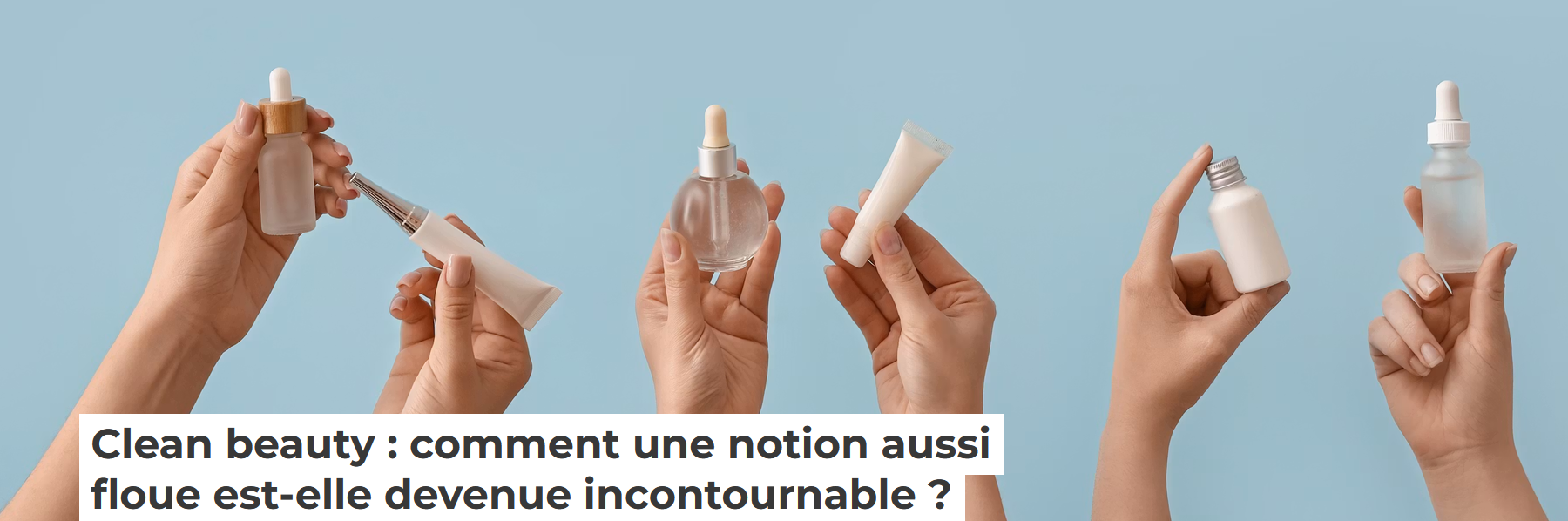
On cosmetics shelves, the promises are endless: “natural,” “sulfate-free,” “paraben-free,” “0% silicone,” “95% naturally derived.” These labels, now ubiquitous, have become simple and reassuring guides for many consumers when faced with formulations that are often difficult to decipher. But what do they really mean? And how has a concept as vague as “clean beauty” become, in just a few years, a major selling point for the cosmetics industry?
The issue of exposure to chemicals found in everyday products is regularly the subject of scientific research. A recent study by Inserm showed that a temporary reduction in the use of certain common cosmetic and hygiene products (shampoos, deodorants, toothpaste, or makeup) could lead to a measurable decrease in several chemical pollutants and endocrine disruptors, such as bisphenol A.